

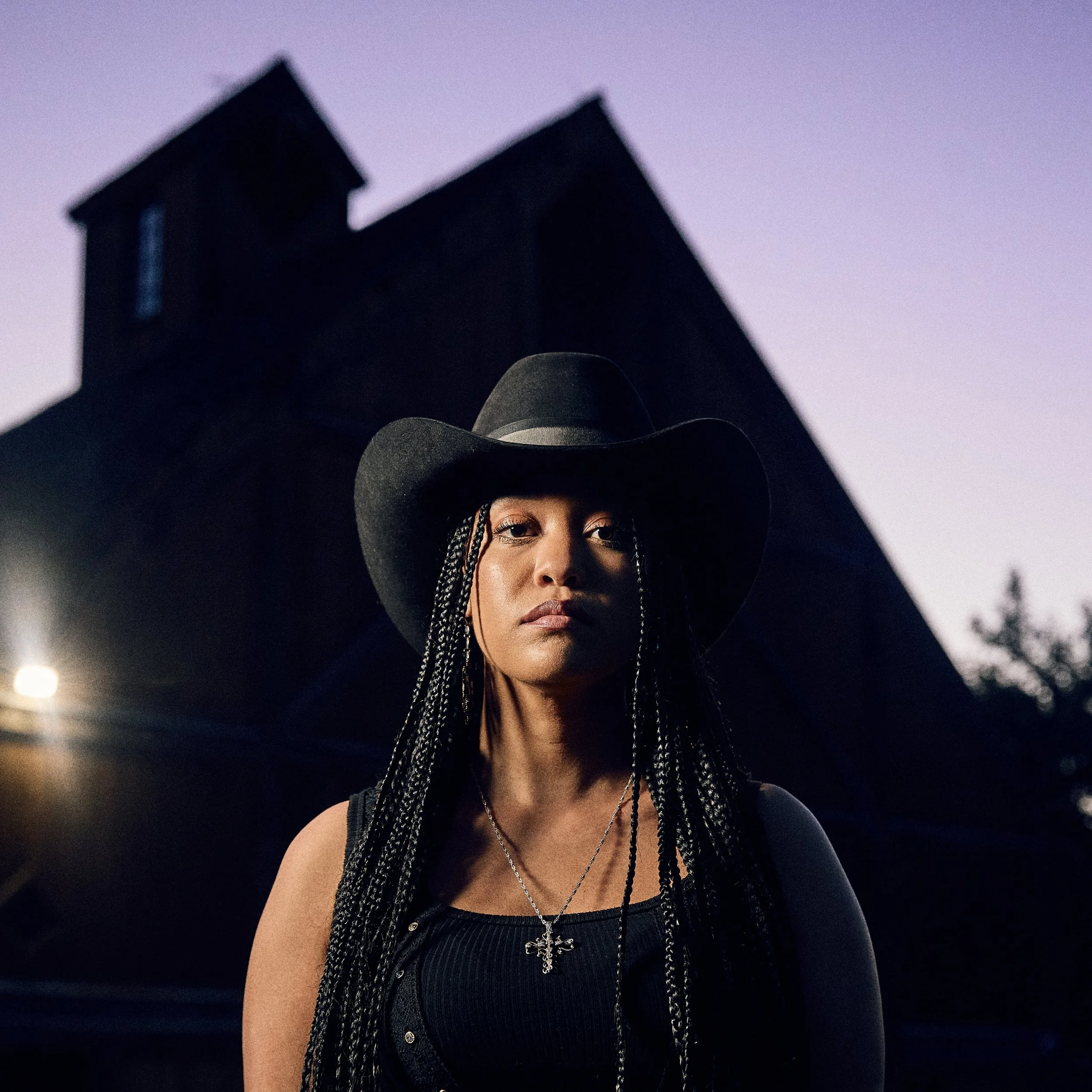
FARAYI
Growing up in rural Idaho, Farayi was exposed to a diverse cross-section of American music through her parents. Her dad was fond of classic country, while her mom loved jazz, Motown, and ’80s pop acts such as Michael Jackson and Whitney Houston.
As a performer, young Farayi also gravitated toward a wide range of music. She played the fiddle; sang gospel and Western swing music; and started writing songs at age 12. “When you think about the vastness of American roots storytelling, that's what I was interested in,” she says, noting her inspirations included Joni Mitchell, Carole King, Hank Williams, and Bob Wills.
While still in high school, Farayi found an additional calling while teaching younger kids music lessons. “It was so rewarding to see the light on my students’ faces when something that was challenging for them now became something that feels easy,” she says. “So I always knew that teaching was going to be part of my life and part of my journey. I just didn't know how.”
She earned a bachelor’s of music at the New England Conservatory of Music and later pursued a master’s degree in contemporary performance at the Berklee College of Music, with a special focus on jazz. In fact, she joined Danilo Perez’s Global Messengers, which gave her the chance to tour the world and earn a Grammy nomination.
Along the way, Farayi kept writing her own songs—and after completing her master’s degree, she moved back to the Pacific Northwest and found herself reconnecting with the music of her childhood. “That's when my writing really started to transition,” she says. “I found myself writing more in a roots vein. I wanted to get back in touch with the music that really spoke to my heart, and the music that made me fall in love with music in the first place – and that was roots music.
“I studied jazz for many years and I let the other part of my musical identity go,” she adds. “Race was a big part of it. When I was a kid, I didn’t see any Black fiddlers, so I didn't really know what was possible for me. I didn't see a lot of people like myself represented in roots music spaces, so I didn't feel like I had permission to be in those spaces. I can see that changing now.”
She found more support to pursue her own musical path after returning to teach at Berklee. Farayi became the youngest woman and person of color to ever become a professor concurrently at Berklee and New England Conservatory. She taught a variety of ensembles across all genres and founded two of her own: one on women in country music, and another focused on women songwriters of the 20th century. The students in the latter ensembles heard the music Farayi had been working on and encouraged her to launch a solo career.
Around this time, Farayi won a Salt Lick Incubator Grant, selected by a panel that included T-Bone Burnett and Jon Batiste.
“I identify myself as an American roots artist and songwriter who is fundamentally rooted in the blues,” she says. “I don't see any of the music that I'm doing—or any of my influences—really being that different. And if we recognize what all the American music that we love and listen to has in common, we find that we're not so different.”
